Metal Element: Clarity, Autumn, and the Lungs' Breath
Why the Metal element rules autumn, the lungs, and the breath. How to spot a Metal person, what imbalance looks like, and how to restore lost clarity.
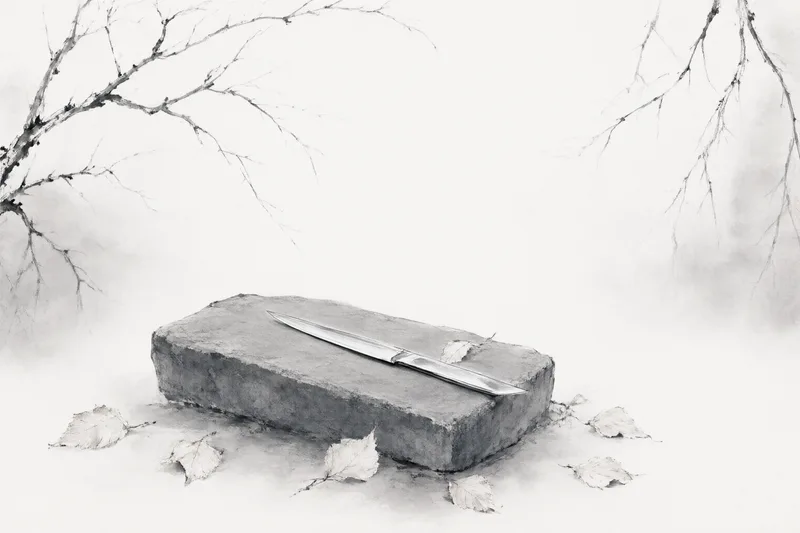
An old butcher near my grandparents’ street kept one knife for thirty years. Not a set. One blade, worn narrower than two fingers, sharpened every morning on a gray stone. Each pass took metal off the edge. By the time I knew him the knife weighed half what it had when he bought it, and it cut better than anything new in the market.
That is the paradox at the center of the Metal element. It gets stronger by losing something. A blade keeps its weight and goes useless. A blade given to the stone stays true.
In the five-element system Metal rules autumn, the west, the lungs, and the large intestine. It is the phase of clarity, structure, and the clean cut that separates what matters from what does not. It is also the element most people misread, because they mistake its surface for its meaning.
This is what the Metal element actually governs, from season to body to temperament, and what it looks like when yours runs sharp, runs dull, or rusts in the drawer.
The element of clarity
Every element arrives with a full set of correspondences, and Metal’s cluster is the cleanest and the coldest.
Autumn is its season, the harvest when the year shows what it actually produced. Its direction is west, where the sun goes down. White is its color, the color of bleached bone, frost, and a page before anything is written. Its taste is pungent, its climate is dryness, and its shape is the circle and the arch, forms without a corner to catch on. Its movement is contraction, the inward pull of a thing tightening toward its essence.
The character for Metal, 金, originally meant bronze or gold, and it still carries both senses: currency and cutlery, wealth and edge. In the oldest Chinese cosmology the phase was defined by a single phrase in the Book of Documents: 金曰从革, metal is said to follow and to change. Two meanings, and both are accurate. Metal takes the shape of its mold, and metal alters whatever it touches. A knife does both at once.
The two Heavenly Stems that carry the phase split it the way Earth splits into mountain and field. 庚 (gēng) is Yang Metal: raw ore, the axe, the plow, the sword before polishing. 辛 (xīn) is Yin Metal: finished jewelry, the needle, the fine instrument, the wedding ring. Most people carry both. You can be a sledgehammer in an argument and a jeweler with your children.
Metal’s virtue is 义 (yì), righteousness. Not kindness, which belongs to Wood, but the sense of what is owed, what is fair, and what a person refuses to do even when nobody is watching. The tradition also ties Metal to 魄 (pò), the corporeal soul, the part of the self that gives the body its animal alertness. It is stored in the lung (肺藏魄).
In the older diagrams Metal is number four and number nine (地四生金, 天九成之). Its animal is the White Tiger of the west. Its trigrams are two, not one: 乾 ☰, pure heaven, and 兑 ☱, the lake. The later scheme gave most of the eight trigrams a single element each. Metal got two, which tells you something about how much the system values the capacity to decide.
What a Metal person looks like
Physically, the old texts describe the Metal type as lean and upright, with clear features and a neatness that seems effortless: a pressed collar, visible bones, skin that shows its condition quickly. The voice tends to be clean and carrying rather than warm. This is a lean, not a rule. Plenty of Metal people are round and loud.
Temperament is where Metal becomes unmistakable. A Metal person:
- notices the one crooked picture in a room full of art
- keeps a calendar that other people rely on
- says no before saying yes, and means both
- has an opinion about quality and cannot pretend otherwise
- finishes things, or does not start them
- keeps a grudge in a drawer labeled principles
- is loyal in a way that has nothing to do with being friendly
The virtue is real. Metal people are the ones who show up for the hard conversation, who tell you the truth about your work, who hold the standard when everyone else has let it slide. They make the cut that saves the project.
The shadow comes from the same direction. Metal can turn rigid, cold, and judgmental. It confuses its own preference with an objective standard. It uses precision as a way to avoid tenderness. At its worst it cannot forgive, cannot bend, and cannot cry, and it calls the resulting stiffness strength. That last one is worth remembering. In this system, the emotion that injures Metal is grief.
Metal in the body: the lungs and the large intestine
In Chinese medicine, Metal anchors to the lung (肺 fèi) and the large intestine (大肠 dàcháng).
The lung is called the canopy (华盖), the lid over all the other organs, and the delicate organ (娇脏), the one that suffers first from cold, heat, and dryness. It governs qi and respiration, which here means far more than breathing: it is the rhythm of taking in, spreading out, and letting go. The lung opens into the nose, rules the skin and body hair, and manages the water passages of the body. When it is strong, the voice carries, the skin holds moisture, and the nose is clear. When it is weak, you catch every cold that passes through the office, the skin goes dry or reactive, and the first sign of stress is a tight chest.
The large intestine is its paired organ, the official of transmission (传道之官), the one that separates what the body will keep from what it will not. The partnership is literal: the lung’s downward movement and the intestine’s downward movement are the same push, seen from two ends of the body.
The emotion of Metal is grief, 悲 (bēi), and worry, 忧 (yōu). The classic formula is 悲则气消, grief makes the qi dissolve. Watch someone receive bad news and you will see the formula in action: the shoulders drop, the breath goes shallow, the voice loses its volume, and the body seems to deflate. The healthy version of this energy is the ability to let go. The unhealthy version is grief that never finishes, which keeps the lung tight and the breath short for years.
The organ clock places the lung between 3 and 5am and the large intestine between 5 and 7am. It is the coldest, quietest stretch of the night, which is why so many people wake at four with a cough or a heavy chest, and why the traditional advice is to be asleep rather than awake and worrying in that window. Our Chinese Body Clock tool maps all twenty-four hours if you want to see where your own schedule sits.
Autumn is the season when all of this shows. Dry air pulls moisture from the skin and the airways, and the old texts warn about autumn dryness injuring the lung (秋燥伤肺). The cough that arrives every October, the dry skin, the nose that cracks inside, the grief that surfaces as the light changes: these are not separate complaints. They are one element asking for care.
Where Metal sits in the cycle
Metal’s position explains more about its personality than any list of traits.
In the generating cycle, Earth feeds Metal. Ore comes out of the ground, and the mountain holds the metal until someone digs. This is why a Metal person needs ground under them: routine, food, a home that does not move, a body that is fed. Metal without Earth is a blade with no handle, precise and useless. The person with strong Metal and weak Earth tends to be brilliant at work and careless with their own life.
Metal, in turn, feeds Water. A vessel holds water and gives it shape, and condensation forms on cold metal. This is the transition from autumn to winter, from harvest to storage. What has been cut and cleaned gets put away, and the reserves of the dark months are built out of the clarity of the bright ones. A person who has sorted their life in autumn enters winter with something in the tank.
In the controlling cycle, Metal cuts Wood. The axe fells the tree and the plane shapes the plank. This is the useful friction between growth and structure. Wood without Metal grows wild, and a person who cannot prune anything ends up with a career of unfinished projects. Metal without Wood has nothing to shape, and it turns its edge on itself: perfectionism with no object, criticism with no subject.
Fire melts Metal. This is the heat of joy and connection, the forge that makes metal useful and the flame that can destroy it. A little Fire softens a rigid person, and a Metal person in love is noticeably less certain of everything, which is usually good for them. Too little Fire and Metal goes cold, correct, and unreachable. Too much Fire and the metal melts down: principles abandoned mid-sentence, standards dropped the moment they cost something.
When Metal runs too strong
Excess Metal is dry, sharp, and hard to be near, though the person usually cannot see it.
The signs: skin that is dry and easily irritated, a nose that is chronically stuffy or bleeding in dry weather, a dry cough that will not clear, constipation, shallow breathing, and a habit of clenching the jaw. The body feels tight, as if everything has been pulled inward a notch too far.
The emotional signature is judgment. The person criticizes first and understands later. They hold themselves to a standard that no one else agreed to and then feel resentful when no one meets it. They cannot let go of the mistake from three years ago, their own or yours. Grief is locked in place, because a Metal person in excess will not cry, will not ask, and will not admit that anything is missing. The stiffness reads as dignity. Often it is armor.
The traditional correction is Fire and Water. Fire softens: warmth, company, laughter, the willingness to be a little wrong in public. Water gives the dryness somewhere to go: rest, fluid, sleep, and the simple admission that a body has needs. In practice that means warm food, enough water, time with people who make you laugh, and a deliberate habit of saying “I don’t know” out loud.
When Metal runs too low
Depleted Metal is quieter than depletion usually is, and it hides in plain sight.
The signs: a chest that feels tight or hollow, a weak voice, frequent colds, allergies that arrive every season, skin that does not heal quickly, and a breath that never gets to the bottom of the lungs. There is often a long stretch of grief behind it, a loss that was handled instead of felt.
The emotional picture is a person who cannot hold a boundary. They say yes too easily, then resent everyone. They cannot decide, because deciding requires cutting something off, and cutting feels cruel. Their standards dissolve under pressure. They may also swing the other way and become harshly self-critical, which is the same weakness wearing the opposite coat.
Metal deficiency often follows real loss. A death, a divorce, a move, a job that ended without ceremony. The body does what it can: it tightens the chest, shortens the breath, and holds the grief in place rather than letting it move. Years later the person has a chronic cough, a fragile immune system, and no idea why.
Rebuilding low Metal is slower than fixing excess, because it asks for something that cannot be forced. You cannot manufacture a principle. You can only practice one until it holds.
Bringing Metal back to balance
Balance for Metal is not softness. It is the ability to cut cleanly and to let go completely.
Breathe all the way down. The lung governs qi, and most adults breathe into the top third of their chest. Ten slow breaths before the morning phone, with the exhale longer than the inhale, is the cheapest repair in this system. The long exhale is the point. It is the downward movement the lung is supposed to make.
Moisture first in autumn. White foods are traditional for the lung: pear, white fungus, lily bulb, lotus root, daikon, yam, honey, and a small handful of almonds. The list is not magic. It is a set of foods that are mild, slightly moistening, and easy on an organ that dislikes dry air. Warm water through the day beats iced drinks in every season, and especially in this one.
Use the season to finish things. Autumn is when the year shows its harvest. It is the correct time to close the unfinished project, clear the closet, cancel the subscription, and end the arrangement that should have ended in spring. Metal is the element of completion, and completion is a skill. Practice it on something small.
Let the grief move. Since 悲则气消, held grief is not neutral. It costs breath. Write the letter you will not send. Tell one person the true version of the loss. Cry in the shower if that is what is available. The goal is not to stop being sad. It is to let the sadness pass through instead of parking in the chest.
Keep the skin and nose fed. The lung rules the skin and opens into the nose, so dryness on the surface is often dryness inside. A humidifier in winter, a barrier cream after hot water, and a saline rinse for a nose that cracks are small acts with a direct line to the organ this element governs.
Choose one standard and keep it. Metal’s virtue is 义, the sense of what is owed. If yours is low, do not start with a philosophy. Pick one thing you will not compromise on this month: a bedtime, a weekly call to someone you love, the truth in a meeting. A kept standard rebuilds the element faster than any supplement.
Use your voice. Singing, chanting, and reading aloud all work the lung directly and are the traditional basis of the 商 (shāng) tone therapy for Metal. They also move grief, which is why people cry at songs. Sing in the car. It counts.
Warmth for the stiff. If you run high on Metal, the correction is Fire, not more discipline. Say yes to the dinner. Let someone else be right. Wear the color that is not gray. A person who can be a little foolish is much harder to break.
Seasonally, autumn is the Metal renewal window. The old advice for these months is to go to bed with the chickens, get up with them, keep the spirit calm, and let the harvest be what it is (秋三月, 此谓容平). It is not the time for new expansion. It is the time to bring in, sort, and store.
The Metal element is not a personality label. It describes how you decide, how you let go, and what you do with the edge you were given. Learn to read it and you stop confusing rigidity with principle, and you stop treating grief as a problem to solve. You sharpen what needs sharpening. You put the blade down when the work is done.
If you want to know where your own five elements sit, our Five Elements Quiz takes about two minutes and returns your dominant and secondary elements. For the deeper layer, the Five Elements Personality Report maps your chart against each element’s strengths and shadow sides, with a section on what depletes Metal fastest and how to rebuild it.
New to the five elements? The Complete Guide to the Five Elements explains the generating and controlling cycles in full. The series continues with the Wood element, the Fire element, the Earth element, and the Water element.
Frequently Asked Questions
How do I know if my dominant element is Metal?
The fastest way is a short personality quiz. In five-element terms, Metal people notice the crooked picture on the wall, keep a calendar other people rely on, say no before yes, and care about quality in a way they cannot switch off. They finish what they start and hold themselves to standards nobody else agreed to. A full chart reading confirms it from your birth date and time.
What body parts does the Metal element govern?
The lungs and the large intestine, with the nose, skin, and body hair closely tied in. In Chinese medicine the lung governs qi and respiration, opens into the nose, and rules the skin, which is why Metal imbalance often shows up as a tight chest, a weak voice, chronic congestion, dry or reactive skin, or a cough that arrives every October.
What happens when Metal is out of balance?
Too much Metal shows as rigidity, cold judgment, perfectionism, a dry cough, constipation, and grief that will not move. Too little shows as weak boundaries, indecision, frequent colds, allergies, and standards that dissolve under pressure. Both read as a blade gone wrong, either too sharp to hold or too dull to cut.
What is the best way to balance Metal in daily life?
Breathe all the way down, with the exhale longer than the inhale. Eat moistening white foods in autumn, finish one unfinished thing, and let held grief move instead of parking in the chest. Keep the skin and nose from drying out, sing out loud once a week, and pick one standard you will not compromise on this month.