Yin and Yang in Interior Design: A Room-by-Room Guide
Every room already leans yin or yang. Learn to read light, texture, sound, and density, then adjust each space for the energy its purpose actually needs.
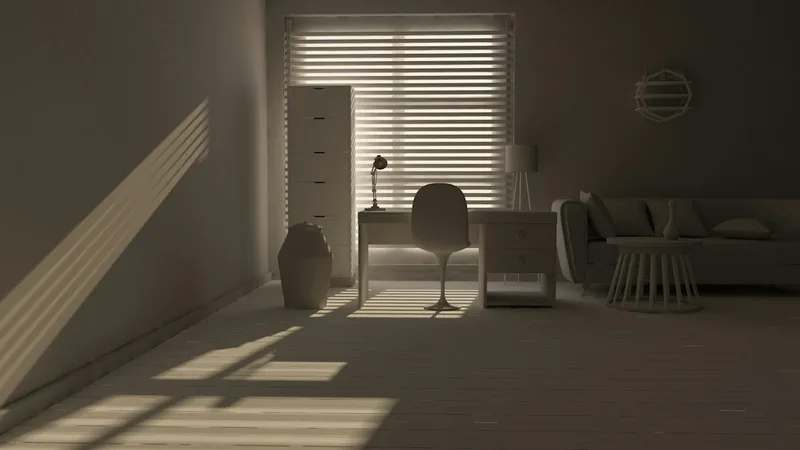
The yoga studio where I practiced for two years had white walls, a bare concrete floor, and three pieces of furniture in the whole room. The office where I worked at the time had white walls, a bare concrete floor, and almost no furniture either. Same palette. Same emptiness. Nobody would have confused the two, and it took me an embarrassingly long time to work out why.
Style was not the difference. The difference was yin and yang. One room was built for doing, the other for being, and everything in them pointed in a consistent direction.
Yin and yang are not a style
Search for yin and yang interior design and you get the symbol printed on cushions. Black and white, curved, decorative. That is not what the framework does in a room. It is not a palette.
Yin and yang describe two directions that energy can move. Yang moves outward: brighter, louder, faster, harder, more. Yin moves inward: dimmer, quieter, slower, softer, less. The two are not opposites in the moral sense. They are two ends of one dial, and every room sits somewhere on it. If you want the full background on the concept, the meaning of the yin yang symbol covers where it came from.
The part most decorating advice skips is that the ratio changes hour by hour without anything being moved. A kitchen at dinnertime is running almost entirely yang: heat, noise, sharp tools, people talking over each other. The same kitchen at eleven at night, lights off, dishwasher humming under the counter, is mostly yin. Nothing about the room changed except the light and the sound.
That is the useful version of this idea. Treat it as deciding which direction a room should lean most of the time, then giving it the ability to move.
The six dials you can actually turn
Almost every choice in a room pushes it one way or the other. These six do most of the work, roughly in order of how much they matter.
| Dial | Leans yang | Leans yin |
|---|---|---|
| Light | Bright, overhead, even, cool white | Dim, low, pooled, warm |
| Sound | Hard floors, bare walls, echo | Rugs, curtains, upholstery, quiet |
| Surface | Gloss, glass, chrome, polish | Matte, raw wood, clay, linen |
| Density | Full shelves, layered objects, pattern | Empty wall, few objects, one focus |
| Line | Straight, angular, vertical, pointed | Curved, rounded, low, irregular |
| Movement | Screens, fans, glossy reflections | Stillness, heavy fabric, dark surfaces |
Nothing in that table costs money to change. The ceiling light in most apartments can be turned off, which is the single largest yin move available to you.
Sound is the dial people forget, and it is the one you cannot see. A room with bare floors, bare walls, and hard furniture returns your own footsteps to you a fraction of a second late. That echo keeps the nervous system slightly alert, the same way a sudden noise does. Rugs, curtains, and upholstery absorb it. The effect is measurable: a 2021 review in Physiology & Behavior of indoor light and sound environments found that both shift alertness, mood, and rest.
Contrast does more work than level
Here is the counterintuitive rule that took me longest to accept. A dim room with one bright pool of light is more restful than a room that is evenly dim.
Even light gives the eye nothing to rest against. Every corner asks for the same low-level attention, all night, and the room ends up feeling flat rather than calm. One warm lamp with darkness around it creates somewhere for the eye to land and somewhere for it to let go.
This is the taijitu argument in lighting form. Each half of the symbol carries a dot of the opposite color, and a room works the same way. An active room needs one still corner. A restful room needs one bright anchor. Absolute yin is a cave, and nobody wants to live in a cave.
The room’s job decides the ratio
Ask what the room is for, and the ratio follows. These are starting points, not rules.
| Room | Leans | Why |
|---|---|---|
| Entryway | Yang into yin | Movement at the door, settling within a few steps |
| Kitchen | Yang | Heat, sharp edges, work, high activity |
| Dining room | Yang | The room exists for conversation and eating |
| Living room | Balanced, slight yang | Company and activity, with corners for rest |
| Home office | Yang with yin anchors | Sustained focus, then recovery |
| Bedroom | Yin | Sleep is the whole job |
| Bathroom | Yin | Washing is restorative, not stimulating |
The entryway is a transition, which makes it the one room with a sequence built in. Bright enough at the door that you can find your keys, softer by the time you reach the inner hallway. One plant, one natural material, a warm light. Whatever greets you at the door sets the tone for everything past it.
The kitchen should be yang and usually is without help. Sharp edges, hard counters, bright task lighting, and heat all push that way. Do not fight it. Just do not let it spill into the rooms next to it, which is what an open-plan layout does by default.
The living room is where most people get the ratio wrong, and the feng shui living room layout guide covers the arrangement side in more detail. Strong yang here is easy: a wall of screens, overhead light, every surface covered. The fix is not to make the room dark. It is to give it corners. One lamp, one soft chair angled away from the television, one cleared surface.
The home office wants yang for the work and yin for the recovery. A plant in the corner, one comfortable chair, and a view you can look at without producing anything. Sustained focus is yang work that runs on yin fuel, and a room that offers only stimulation burns through it by mid-afternoon.
The bedroom is the room where excess yang does the most damage, and it is the most common problem in modern homes. Screens, a cluster of warm lamps, bright red bedding, a phone charging on the nightstand an arm’s length from your head. All of it says act, right at the hours you want the opposite. The bedroom guide goes into placement, but the yin-yang version is simpler: get the screens out, drop the light to one low warm source, and let the room be dark in the corners.
Signs a room is stuck on one side
You do not need a rulebook. Your behavior tells you.
Too yang. You stand up without deciding to. You leave the room to take a call you could have taken sitting down. You cannot read in there for twenty minutes. You eat standing at the counter. Conversation stays shallow and jumps between topics. At night you are tired and wired at the same time.
Too yin. You avoid going in at all. You feel heavy in the morning even after enough sleep. The room has quietly become storage, collecting things nobody uses. You can never find anything. Guests do not linger there, not because it is unpleasant but because there is nothing to respond to.
Both are fixable with the same method. Change one dial, not five.
Shifting a room one notch
Pick the dial with the most room to move and change only that one. Then live in the room for a week before touching anything else. Changing five things at once tells you nothing about which one worked.
To go toward yin: turn off the overhead light and put a lamp at seat height. Add one rug if the floor is hard. Swap one glossy surface for a matte one. Clear a shelf completely rather than rearranging it.
To go toward yang: add a second light source at a different height. Put something with a straight vertical line in the room, a tall shelf or a floor lamp. Introduce one saturated color. Take the heavy drape off the window and let the room see daylight.
That is the whole method. It works because a room is read as a whole, and the eye registers the direction of the space long before it registers any individual object. If you want to see which areas of your own layout are running heavy and which are empty, the Floor Plan Analysis tool overlays the bagua on a photo of your floor plan and marks the difference.
A room that can do both
The best rooms shift. The mechanism is layers of light: one overhead source, one lamp at eye level, one small accent somewhere low. Three switches instead of one, and the same room can be a workspace in the morning and a place to sit in the evening.
The five elements at home framework adds the next layer of detail, mapping color and material to Wood, Fire, Earth, Metal, and Water. Yin and yang is the single axis underneath it: is this room asking you to do, or asking you to stop. Get that direction right and the rest of the decorating decisions get easier, because you know which way each choice should push.
The studio and the office I started with looked the same on paper. One had a wall of windows facing a street, hard floors, and a teacher calling out counts. The other had a north-facing window, a rug, and a rule about phones. Same white walls. Opposite directions. Only one of them ever made me want to lie down on the floor at the end of the hour.
Common questions
How do I know if a room is too yin or too yang? Watch what your body does. In a room that is too yang you stand up without deciding to, you leave to take a call, you cannot settle into a chair for twenty minutes. In a room that is too yin you avoid going in at all, you feel heavy in the morning, and the space starts collecting things nobody uses. Behavior is a better read than any rule.
What is the fastest way to make a room feel calmer? Turn off the ceiling light and turn on one lamp. A single pool of warm light at eye level reads as far more restful than an evenly lit room, even though the evenly lit room is technically darker in the corners. Light direction and contrast matter more than brightness.
Does yin and yang in design mean a 50/50 balance? No. Perfect symmetry between the two is not the goal and rarely looks good. The goal is the right ratio for what the room is for. A kitchen should run mostly yang. A bedroom should run mostly yin. What you want is a rhythm across the home, not an even split in every room.
Which colors count as yin and which as yang? Warm, saturated, bright colors lean yang: red, orange, bright yellow. Cool, deep, muted colors lean yin: charcoal, slate, indigo, deep green. But finish matters as much as hue. The same blue is yang in glossy lacquer and yin in matte chalk paint, because reflection reads as movement.
Should every room contain both yin and yang? Yes, and this is the part people miss. A purely yang room exhausts you and a purely yin room feels dead. The dot inside each half of the taijitu makes the point: a restful room still needs one bright anchor, and an active room still needs one place for the eye to rest.