Five Elements and Your Home: A Decorating Balance Guide
Your rooms already lean toward one element. Learn to read Wood, Fire, Earth, Metal, and Water at home, then decorate to bring all five back into balance.
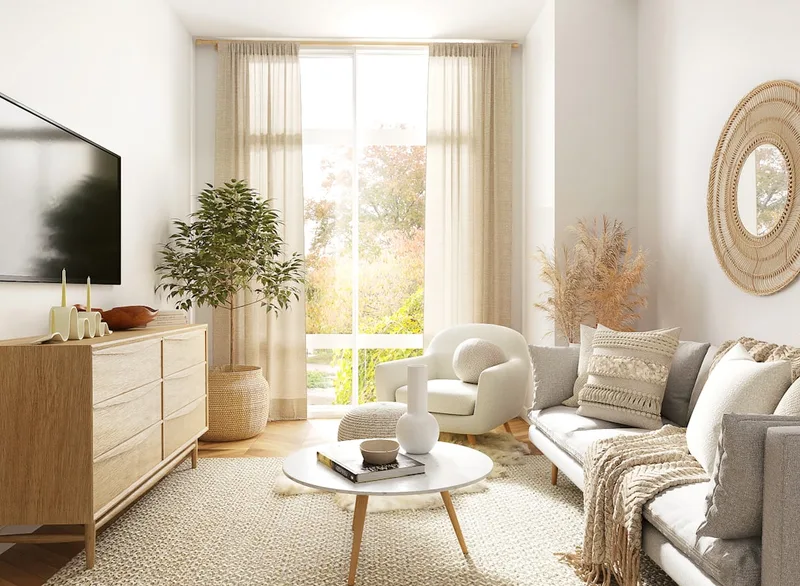
The apartment I rented in my late twenties had a coffee table the size of a small car, a wall of south-facing windows, and not a single plant. I did not think of it as a room tilted toward Fire. I thought of it as bright, and for about a year I could not understand why I never wanted to sit in it.
The problem was not the light. It was that everything in the room was doing the same job. The windows poured in sun, the walls were warm cream, the lamp by the sofa gave off an orange glow, and the only decorations were two candles I never lit and a stack of magazines. Five elements, and that living room had committed itself to one. There was nothing in it to slow the room down.
Decorating with the five elements is not about buying five of everything and arranging them into a set. It is closer to mixing a meal. You notice what the room already has too much of, you notice what it has none of, and you adjust. The five elements are Wood, Fire, Earth, Metal, and Water, and every color, material, and shape in your home belongs to one of them.
What the elements look like in a room
Most people meet the five elements through color and stop there. Color is only one of four channels. A room also speaks through material, shape, and light, and those three are often louder than paint.
| Element | Colors | Materials | Shapes | Light | What it does |
|---|---|---|---|---|---|
| Wood | Green, olive, teal | Wood, plants, rattan, bamboo, linen | Tall, rectangular, columnar | Filtered, dappled | Growth and upward movement |
| Fire | Red, orange, magenta | Candles, lamps, fireplaces, screens | Triangle, pointed, star | Bright, warm, direct | Activity and visibility |
| Earth | Yellow, ochre, beige, terracotta | Ceramic, clay, stone, brick, plaster | Square, low, flat | Soft, even, flat | Stability and nourishment |
| Metal | White, grey, silver, gold | Brass, steel, marble, glass | Circle, dome, arch | Cool, bright, precise | Clarity and letting go |
| Water | Black, deep blue, charcoal | Glass, mirror, water, flowing fabric | Wavy, curving, irregular | Dim, reflective, moving | Rest and depth |
Read that table as a checklist rather than a palette. A bare white room with a steel desk and a marble tray is not neutral. It is a Metal room, and it will feel like one: precise, cool, and a little hard to relax in.
The two cycles, in plain furniture
The elements do not sit still next to each other. They feed one another in one direction and restrain one another in the other, and both patterns play out in a house whether you plan for them or not.
The feeding cycle runs Wood to Fire to Earth to Metal to Water and back to Wood. Wood feeds fire, fire leaves ash, ash becomes earth, earth bears metal, metal carries water, water grows wood. In a room, this is the difference between a decorating scheme that feels alive and one that feels assembled. A wooden shelf holding a lamp, next to a ceramic bowl, beside a brass frame, with a glass vase nearby: each object hands energy to the next.
The restraining cycle runs the other way: Wood parts Earth, Earth absorbs Water, Water quenches Fire, Fire melts Metal, Metal chops Wood. This is where rooms go wrong. A wall of healthy plants in a yellow, heavily stuccoed room is Wood parting Earth, and the space can feel restless. A cluster of candles under a steel shelving unit is Fire melting Metal, and the corner reads as agitated even if nobody can say why.
You do not need to memorize either cycle. Follow one rule instead. When a room feels off, look for two elements fighting in the same corner.
The walkthrough that tells you what you are missing
Before buying anything, spend ten minutes reading your home. Take one room at a time and tally four things: the colors you can see without moving, the materials you can touch from where you stand, the dominant shapes, and where the light comes from.
Most modern homes come back with the same result. Wood and Metal dominate. Floors are wood or wood-look, cabinets and frames are metal or white, screens are everywhere, and there is often not one plant in the room. Fire appears as lighting and electronics rather than as warmth. Earth and Water are nearly absent.
That result explains a specific feeling. Rooms heavy in Wood and Metal are good at motion and focus. They are poor at rest. If your home feels efficient and slightly cold, you are not imagining it. Earth and Water are the two elements that make a room feel settled, and they are the two most homes leave out.
Wood: the element of growth
Wood is the easiest element to add and the easiest to overdo. It brings plants, natural timber, rattan, bamboo, and linen, plus the whole green family from sage to deep teal. Its shapes are tall and vertical, so a floor lamp or a tall bookshelf carries Wood even if it is painted white.
Wood’s direction is the east and southeast, and its season is spring, which is why a room with plants in it feels like it is still early in the year. A single large plant does more than five small ones, because the eye reads height as growth. Place it where a bare corner meets the light.
The overuse is real. Wood thrives on movement, and a room packed with plants, green walls, and rattan furniture in every corner has nowhere for the eye to rest. Two or three plants plus one wooden piece is usually enough for a living room. The rest of the room should belong to someone else.
Fire: warmth, and how fast it tips
Fire is light, and the modern home is drowning in it. Screens, lamps, backlit keyboards, a glowing router, candles on a shelf that never get lit. All of it counts. Fire also owns red, orange, and magenta, and the pointed shapes: triangles, stars, tapered legs, a spiky plant.
Its season is summer and its direction is south. Fire makes a room visible and social, which is exactly what you want in a dining room or a place where people gather. It is a poor fit for a room whose job is rest.
Two rules keep Fire useful. Keep it to a few deliberate sources rather than a background hum, and keep it away from the bedroom. A pair of candles on a table is a gesture. Twenty small light sources scattered across a room is a low-grade agitation that nobody can name.
Earth: the anchor most homes are missing
Earth is what your room stands on, in every sense. Its colors run yellow, ochre, beige, and terracotta. Its materials are ceramic, clay, stone, brick, and plaster. Its shapes are the square and the low, flat form, which is why a heavy coffee table or a wide ceramic planter settles a room that felt like it was floating.
Earth’s direction is the center, with the northeast and southwest as its corners, and its season is the hinge of late summer. The center of a home matters more than its edges in this system. A cluttered, unanchored middle room quietly destabilizes everything around it.
Adding Earth is the fastest fix for a home that feels thin. One clay bowl on a table, a wool rug underfoot, a stone countertop, a beige linen cushion. Earth does almost nothing dramatic and it changes everything about how a room sits.
Metal: the element you strip out without noticing
Metal is clarity. It owns white, grey, silver, and gold, plus brass, steel, and marble. Its shapes are the circle, the dome, and the arch. Its direction is the west and northwest and its season is autumn, the point in the year when things are cut back and finished.
Most homes have plenty of Metal by accident: white walls, stainless appliances, dark grey sofas, chrome legs. What they lack is Metal used on purpose. Metal’s real job in a room is subtraction. It is the element of the empty surface, the finished project, the drawer that closes easily.
When a room feels heavy or stuck, Metal is often the missing element rather than the excess one. Clear a surface completely, add one round object, let a wall stay bare. Metal is the only element whose best contribution is sometimes nothing at all.
Water: the element of rest
Water is the element rooms most often need and least often get. Its colors are black and deep blue, its materials are glass, mirror, and anything that actually holds water, and its shapes curve and flow. Its direction is north, and its season is winter, when energy drops down and stores itself.
Water shows up in a home as reflection and depth. A mirror, a glass table, a dark accent wall, a fabric that drapes rather than hangs. Air that moves. Water calms a space by giving the eye somewhere to sink, which is why a dark wall can feel restful in a way that no color of paint ever does on its own.
Water is also the element to keep modest. A room that is all glass, mirror, and black can read as cold and disorienting rather than deep. One reflective surface and one dark anchor is the usual dose.
Room by room
Each room has a job, and the job decides which elements lead. Here is the short version.
In the living room, Wood and Earth lead, with a touch of Fire for warmth and Metal for order. Plants, a wooden table, a wool rug, one good lamp, and a single round object will do it. This is the room where all five can be present at once.
The bedroom runs on Earth and Water, with Wood optional. Keep Fire low here. Bright red bedding, a screen facing the bed, and a cluster of warm lamps all push the room toward activity at the hours you want the opposite. A wooden bed frame, clay tones, and one dark element makes a bedroom that works.
The kitchen is Fire and Earth by nature, because the room cooks. Metal belongs here too, in knives and steel and stone counters. Wood shows up as herbs and a cutting board. Go light on Water, since black counters and deep blue walls push against a room that is already running hot.
A home office wants Wood and Metal. Wood for growth and forward motion, Metal for the finished task and the clear desk. A plant, a wooden desk, a steel lamp, and one empty surface. Heavy Fire in a home office is the classic mistake, since stimulation and sustained focus are not the same thing.
The entryway leans Wood, because the entrance is where movement starts. One plant, one natural material, and a little warm light. Whatever greets you at the door sets the tone for everything behind it.
Fixing a room that leans too far
When a room feels wrong, you rarely need to redecorate. You need to move or add five things. One per element.
Add a plant for Wood. Light a lamp with a warm bulb for Fire, and remove a screen from the room while you are there. Bring in one ceramic or clay object for Earth. Clear a surface completely and add one round metal piece for Metal. Put a single reflective or dark element in for Water.
That is the whole method. It works because a room is read as a whole, and the eye notices absence faster than it notices excess. Five small moves rebalance a space that four coats of paint could not.
Start with the walkthrough and trust what you find. Most homes do not need a designer. They need the three elements they have been missing.
The living room with the giant coffee table did not get a designer. It got a fiddle leaf fig in the empty corner, a wool throw over the arm of the sofa, and a switch from a warm orange bulb to a softer one. Nobody walked in and said the room had changed. They just started sitting in it.
If you do not yet know which elements lead in your own chart, the Five Elements Quiz takes about two minutes and returns your dominant and secondary element. For a full read of your home rather than your chart, Floor Plan Analysis overlays the bagua on a photo of your layout and shows which areas are running heavy and which are empty. The Complete Guide to the Five Elements covers the two cycles in more depth, and if your home is already green to the point of clutter, Feng Shui Plants explains which ones to keep.
Frequently Asked Questions
How do I know which element my home needs?
Walk through the rooms and count what you actually see. Note the colors, the materials, the shapes, and how much light there is. Most homes repeat two elements in nearly every room and skip the other three. Whatever is missing from the count is what your decorating should add.
Can a room have too much of one element?
Yes, and it is the most common problem in modern homes. A living room full of screens, candles, and warm orange light is running on Fire, which makes it hard to sit still in. A bedroom that is all glass, mirrors, and cold grey is running on Water and Metal, which can feel ungrounded. Excess shows up as a feeling, not a rule.
What colors and materials belong to each element?
Wood is green and natural wood, plants, rattan, and linen. Fire is red, orange, and light itself, from candles to lamps. Earth is yellow, ochre, clay, ceramic, stone, and brick. Metal is white, grey, brass, steel, and marble. Water is black and deep blue, plus glass, mirrors, and anything that curves.
Do I have to redecorate to balance the elements?
No. Balance is usually a matter of five small moves rather than a renovation. Add a plant to a bare corner, swap one fabric, change a lamp's warmth, move a mirror, bring in a ceramic bowl. One object per element is enough to shift how a room reads.
Which element belongs in a bedroom?
Earth and Water lead, because both support rest and depth. Wood can stay as plants or a wooden frame. Keep Fire low: bright red bedding, a television on the wall, and a cluster of warm lamps all push a bedroom toward a state of activity at the exact hours you want the opposite.