Real vs Fake Crystals: How to Tell If a Stone Is Genuine
No single test proves a crystal is real. Glass, dye, and lab-grown quartz pass most of them. Here are the checks that actually work, in the order to use them.
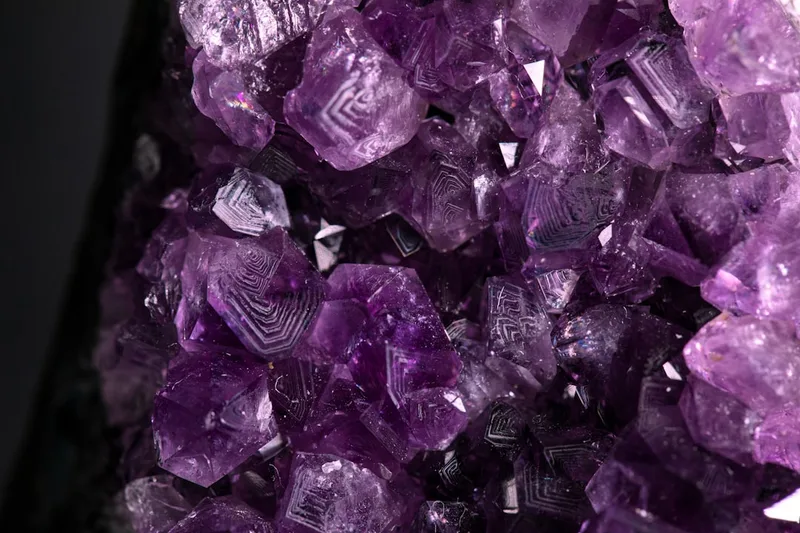
The pendant cost $12 and the market seller called it jade. I bought it anyway. Twelve dollars is not a jade price, and some part of me knew that when I handed over the cash. Two weeks later the green had worn off the edge nearest my thumb, and the stone underneath was chalk white.
It was dyed howlite. The seller may not have known either. That is the uncomfortable part of crystal buying: a large share of what is sold as gemstone is glass, dye, resin, or something grown in a laboratory, and much of it looks better than the real thing.
No single test catches all of it. The temperature rule, the scratch test, the “real stone feels cold” advice on every forum, each one catches some fakes and waves others straight through. What works is stacking a few checks in the right order, and knowing which stones are worth testing in the first place.
Start with the price and the seller
The fastest test costs nothing. Ask what the stone is and what it should cost before you look at it closely.
A strand of lapis lazuli for $8 is not lapis. Good lapis runs from $2 to $10 per carat depending on the depth of blue and how much pyrite it carries, and a full strand of 8mm beads is a serious purchase. The same logic applies to tanzanite, ruby, emerald, and any stone with a famous name. The name is what sells the fake.
Learn the rough range for the stones you actually buy. Quartz, amethyst, agate, and jasper are cheap and abundant. There is almost no reason to counterfeit a $6 tumbled amethyst, so most cheap stones are exactly what they claim to be. Counterfeiting starts where the price starts.
The seller matters almost as much. A shop that names treatments on the label knows the difference between treated and fake. A shop that calls everything “natural AAA grade” is telling you something too.
Look for bubbles
This is the single most useful check for the most common fake.
Glass is the counterfeit of choice because it is cheap, easy to color, and hardens into any shape. The giveaway is bubbles. Real crystal forms over thousands of years under pressure, and it does not trap round air pockets. Glass cools fast, and it does.
Hold the stone up to a light and look through it with a magnifier if you have one. Round bubbles, especially a scattered trail of them, mean glass. So does a perfectly uniform color with no internal structure at all.
Natural stones almost always carry some imperfection. Veils, fractures, mineral flecks, color zoning, tiny included crystals. A stone that is flawless, cheap, and large is the one to be suspicious of, not the one to celebrate.
Temperature and heft: weak tests, useful tiebreakers
The famous one first. Real stone conducts heat away from your hand quickly, so it feels cold when you pick it up and warms slowly. Glass and plastic warm up almost immediately.
It is true as far as it goes, and it is a weak test. On a hot day, or after a stone has been sitting in a display case under a lamp, everything feels warm. A glass bead that has been in a cold box feels cold too. Use it as a tiebreaker, never as a verdict.
Weight is more reliable. Real stone is denser than glass or resin, and a strand of genuine beads has a heft that surprises people the first time they hold one. It is one reason experienced buyers handle stones before they study them.
Check the color where it collects
Dye is easy to spot once you know where to look. It pools in the places a cloth cannot reach.
Take a close look at the drill holes on a bead, the pits and crevices on a rough stone, and any crack running through it. In a dyed stone those areas are darker than the rest, because the dye settled there. On a natural stone, color runs through the mineral, and it does not concentrate in the low spots.
A cotton swab dipped in acetone, or plain nail polish remover, will lift dye off many stones. Rub it on an inconspicuous spot. If the swab comes away colored, the stone is dyed. This works on howlite sold as turquoise, on dyed agate, and on quartz dyed to imitate citrine or rose quartz.
Dyed stones are still real minerals. A dyed agate is an agate. It is simply not what the label says it is, and it should not be priced as though it were.
Treated is not the same as fake
This distinction is worth more than any single test, because it is where most buyers draw the wrong conclusion.
Heat treatment is standard industry practice. The overwhelming majority of citrine on the market is amethyst that has been heated until it turns yellow, and almost all blue topaz is irradiated and then heated. Both are permanent, both are legal, and both are disclosed at the wholesale level. A heated amethyst sold as citrine is not a counterfeit. It is the market.
Irradiation darkens quartz and produces the smoky and greenish tones you see in treated stones. Again standard, again permanent, and safe at the levels used.
The line is honesty, not treatment. A seller who says “this is citrine” when they mean heated amethyst is using the trade’s own loose naming. A seller who says “natural citrine” and charges a natural citrine price for heated amethyst has crossed into something else.
If you want natural citrine specifically, know that it is rare, pale yellow to gold, and several times the price of the heated version. Most of what sits in a bowl on a shop counter is the heated kind.
What only a laboratory can settle
Some fakes are chemically identical to the real thing, and no home test will catch them.
Synthetic quartz, grown in an autoclave in a matter of weeks, has the same hardness, the same density, and the same crystal structure as quartz dug from the ground. It is quartz. What gives it away is usually microscopic, and sometimes visible only under the instruments a gem lab runs.
Reconstituted stone is the other case. Amber, turquoise, and lapis are all commonly sold as “reconstituted,” which means chips and dust of the real material bonded with resin. It contains real stone. It is not a natural crystal.
For anything over a few hundred dollars, the answer is a certificate. The GIA and the IGI both grade colored stones, and a lab report states whether a stone is natural, treated, or synthetic. On a $12 pendant this is absurd. On a $2,000 tanzanite it is the only check that matters.
The scratch test, and why to be careful with it
Hardness is real and measurable. On the Mohs scale talc sits at 1 and diamond at 10. Quartz is a 7, which means it scratches glass and steel but not topaz or corundum.
People use this to test a stone by dragging it across another stone or a glass pane. Two problems with that.
First, it damages the piece. Scratch a real amethyst with a quartz point and you have traded a fake for a chipped genuine stone. Second, plenty of common fakes are hard too. Synthetic quartz scores a 7 on the same scale, so it passes the test designed to catch it.
If you must test hardness, do it on the base of a cabochon or an edge that never shows, and accept that passing proves less than you hoped.
A quick table of what you are probably looking at
| What you see | What it usually is | How to confirm |
|---|---|---|
| ”Jade” under $30 | Dyed howlite, serpentine, or glass | Dye in crevices, acetone swab |
| Bright “turquoise” with dark veins | Dyed howlite or reconstituted turquoise | Veins are dye lines, not natural matrix |
| Uniform yellow “citrine” | Heated amethyst | Assume heated unless certified natural |
| Flawless clear “quartz” | Glass or synthetic quartz | Bubbles mean glass; synthetic needs a lab |
| Deep blue “lapis” at a low price | Dyed jasper or reconstituted | Pyrite should look metallic, not painted |
| ”Rose quartz” that is garish pink | Dyed quartz or glass | Color in cracks, acetone swab |
| Oversaturated “amethyst” with no flaws | Glass or synthetic | Bubbles, uniform color, price |
| ”Moldavite” for $20 | Factory green glass | Real moldavite is rare and priced per gram |
What to do if you bought a fake
The stone is still a stone, and if you like it, keep it. The only real loss is money paid for a name you did not get.
The person who sold it may genuinely not have known, especially at a market stall. If the sale was online and the listing claimed natural stone, you have a case for a refund, and a polite message with a photo usually settles it faster than a dispute.
For the pendant I bought, I kept it. It hangs on a hook near the window, and it is a decent reminder that the price tag and the label are two different documents.
Buying so this happens less often
A few habits cut the odds more than any test.
Buy loose stones when you can, so you can see the whole piece and check the drill hole. Buy from sellers who name treatments on the label. Ask directly whether a stone is natural, heated, dyed, or synthetic, and listen for whether the answer is specific. Vague answers are answers.
And if the price looks too good, believe the price. That was the whole lesson of my $12 jade pendant.
Common questions
Can I tell if a crystal is real by how cold it feels? Not reliably. Real stone conducts heat away fast, so it feels cold at first, but a cold glass bead feels the same, and a stone that has been sitting under a shop lamp comes up warm. Use the temperature test as a tiebreaker after you have checked for bubbles and dye.
How can I tell if a crystal is dyed? Look at the drill holes, cracks, and pits, where dye pools and turns darker than the rest of the stone. A cotton swab with acetone or nail polish remover will lift dye off many stones when you rub it on an inconspicuous spot.
Is heated amethyst sold as citrine a fake? No. Almost all citrine on the market is amethyst that has been heat treated, and this is standard industry practice. It becomes misleading only when a seller calls it natural citrine and charges the natural price.
Can I test at home whether a crystal is synthetic? Usually not. Synthetic quartz has the same hardness, density, and crystal structure as natural quartz, so every home test passes it. A gem lab with a microscope and spectroscopy is the only reliable answer.
Should I ask for a certificate when buying crystals? For anything over a few hundred dollars, yes. A GIA or IGI report states whether a stone is natural, treated, or synthetic, and it is the only document that carries weight if you resell.
A clear stone is not always an expensive one. Agate, jasper, and plain quartz are honest minerals that cost almost nothing, and nobody bothers to counterfeit them. The fakes cluster around famous names and high prices, which is also where the tests get harder and a certificate starts to matter.
If you are still choosing which stones to bring home, the top ten feng shui crystals narrows the field to the ones that earn their place, and the Five Elements Crystal Guide sorts crystals by element and matches them to your birth chart. Once they are yours, how to cleanse crystals covers the five methods and which stones each one is safe for. For a stone-by-stone reference with care notes on more than 40 crystals, the Crystal Guide Ebook is the version that stays on your shelf.