Crystal Bracelet Meaning: Which Hand, Which Stone to Wear
A crystal bracelet works differently on the left wrist than on the right. Here is which hand draws energy in, which releases it, and the stones for each.
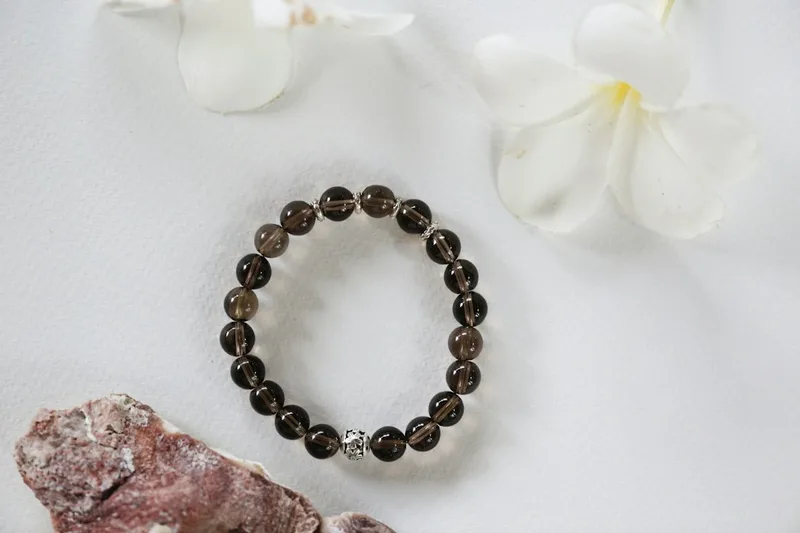
Two bracelets arrived in the same order. A rose quartz strand and a black obsidian one, close enough in size that I mixed them up on the first morning. I put both on my left wrist and wore them for a week before anyone asked me why.
The question came from a friend who had been wearing crystal bracelets for years. Her version of the rule was short. Rose quartz goes on the left. Obsidian goes on the right. I had it half wrong, and the half I had right was an accident.
The left hand and the right hand do different jobs in Chinese practice. Once you know which is which, the whole display case at a crystal shop sorts itself. You stop picking a stone for its color and start picking it for what you want it to do.
Why the hand matters at all
Chinese medicine describes energy as moving through the body in two directions at once. The left side is tied to receiving, the right to releasing. A bracelet on the left hand is thought to draw its quality inward. The same stone on the right hand pushes that quality out into the space around you.
The shorthand for this is 左進右出 (zuǒ jìn yòu chū), which translates as “left in, right out.” Four characters, and they settle where most bracelets belong.
The rule is not about which wrist looks better or which one you write with, though that last part comes back later. It is about what you want the stone to do. A stone that attracts something goes on the receiving side. A stone that clears or protects goes on the releasing side, where it can push away what it catches.
The left wrist: stones that draw things in
The left wrist is for stones you want working on you. Love, calm, focus, money, luck. Whatever you are trying to bring closer.
Rose quartz is the classic. It is the stone of gentleness and romantic love, and it is the one most people buy first. Amethyst comes next, worn for calm and clear thinking, and often recommended for anyone who lies awake replaying the day. Citrine carries a reputation for wealth and confidence, which is why it turns up in so many shop windows.
Then there are the stones with a narrower job. Moonstone is worn for intuition and new beginnings. Green phantom quartz is the business stone, tied to career growth and steady income rather than sudden windfalls. Strawberry quartz is for charm and warm attention. Lapis lazuli, worn on the left, is associated with honest speech and clear judgment.
What these have in common is direction. Every one of them is thought to pull something toward the wearer.
The right wrist: stones that clear and protect
The right wrist carries the other half of the work. These are the stones that take something away.
Black obsidian is the one people reach for first. It is volcanic glass, formed when lava cools too fast to crystallize, and it has a long reputation for absorbing whatever is heavy in a room or a person. Black tourmaline does a similar job with a gentler feel, and it is the stone most often recommended for anyone who works with a lot of people. Smoky quartz draws off tension and grounds it. Hematite steadies, and some people wear it for courage before something difficult.
The logic here takes a moment to sit right. If a stone absorbs negativity, why put it on the hand that releases? Because the releasing hand is where the clearing happens. The stone catches what it catches, and the right wrist is the side that pushes the catch away instead of pulling it in.
Red agate is the stone where the two traditions disagree. Some teachers place it on the right for protection, others on the left for vitality. Either answer is defensible, which is worth knowing before someone tells you yours is wrong.
A quick reference for the stones you already own
| Stone | Wrist | What it is worn for |
|---|---|---|
| Rose quartz | Left | Love, gentleness, self-acceptance |
| Amethyst | Left | Calm, focus, restful sleep |
| Citrine | Left | Wealth, confidence, energy |
| Moonstone | Left | Intuition, new beginnings |
| Green phantom quartz | Left | Career growth, steady income |
| Lapis lazuli | Left | Clear speech, honest judgment |
| Black obsidian | Right | Absorbs and clears heaviness |
| Black tourmaline | Right | Protection, grounding |
| Smoky quartz | Right | Draws off tension, grounds |
| Hematite | Right | Steadiness, courage |
| Red agate | Either | Vitality or protection, depending on the teacher |
| Clear quartz | Either | Amplifies whatever sits beside it |
Clear quartz is the exception. It is treated as an amplifier rather than a specialist, so it strengthens the stones around it instead of doing a job of its own. Worn on the left it magnifies what you are drawing in. Worn on the right it magnifies what you are clearing.
If you are left-handed
The rule has a mirror, and most modern practitioners use it. Your receiving hand is the one you do not write with. For a left-handed person that is the right wrist, so rose quartz moves to the right and obsidian moves to the left.
Not everyone agrees. Some traditional teachers keep the left wrist as the receiving hand regardless of which hand you favor, on the reasoning that the rule describes the body rather than the habit. There is no way to settle this from the texts, and both versions are in active use. Pick the one that makes sense to you and keep it consistent, because a rule you keep changing is not much of a rule.
How many bracelets belong on one wrist
Two or three on one wrist is common, and the practical limit is comfort rather than doctrine. A stack that presses into your wrist bone or catches on sleeves will come off more often than you intend.
The one guideline that matters is compatibility. Keep the attracting stones together on the left and the clearing stones together on the right. Putting rose quartz and black obsidian on the same wrist is the mistake I made in that first week, and the usual objection is that the two are working in opposite directions. Whether or not you accept the mechanism, the pairing does very little for either stone.
If you want to wear a stone on the “wrong” wrist because that is the one it fits, nothing breaks. The tradition is a guide to intent, not a lock on your jewelry.
Beads, counts, and the string that holds them
Bracelet bead counts are not random. The 108-bead strand is the classic Buddhist mala, one bead for each of the 108 afflictions the practice is meant to clear. You will also see 18 and 21 beads, both drawn from the same devotional tradition, and 14 for a slimmer wrist. Any count can carry meaning if you assign one, but these four are the ones with history behind them.
The string matters more than most people expect. Elastic cord stretches and loses its spring, and a bracelet worn daily typically needs restringing somewhere between six and twelve months. When the cord starts showing at the knots or the bracelet leaves a mark on your wrist, it is time.
Natural stone beads vary in hardness, and soft stones scratch against hard ones. Moonstone, selenite, and fluorite are the ones to watch. If you stack them with quartz or agate, the softer stone takes the wear.
When a bracelet breaks
A snapped strand looks like bad luck and is read the opposite way in Chinese practice. The stone is said to have taken a blow that was headed for the wearer. People who follow this view thank the bracelet rather than mourning it.
The practical response is the same either way. Gather the beads before they scatter, check them for chips, and cleanse them. Then either restring the bracelet on fresh cord or return the stones to the earth. A stone that has done its job does not need to be thrown in a bin.
The care that keeps a bracelet working
A crystal bracelet sits against skin all day, which means it collects more than a shelf stone ever does. Cleansing matters more here, not less.
The short version: take it off for showers, swimming, and anything with chlorine or salt water. Both dull a polished surface over repeated contact. Keep it away from perfume and hairspray for the same reason. Store it off the wrist when you sleep if the stone is soft or the band is tight.
For the cleansing itself, the five methods guide covers water, salt, moonlight, smoke, and sound, and which stones each one is safe for. Selenite and calcite, for instance, should never go in water at all.
One more habit to build. Cleanse a new bracelet before you wear it. It has passed through a warehouse, a shop, and possibly several hands before it reached yours.
Sorting a bracelet collection is mostly a matter of deciding what you want each stone to do. Once the left and right hands have their assignments, the display case stops being a wall of pretty colors and starts reading like a shelf of tools.
If you are still choosing your first stone, the top ten feng shui crystals narrows the field to the ones that earn their place, and the Five Elements Crystal Guide sorts crystals by element and matches them to your birth chart. For a stone-by-stone reference you can keep on a shelf, the Crystal Guide Ebook covers more than 40 crystals with the care notes for each.
Frequently Asked Questions
Which hand should I wear my crystal bracelet on?
Wear attracting stones on the left wrist and clearing or protective stones on the right. Rose quartz, amethyst, citrine, and moonstone draw something toward you, so they belong on the receiving hand. Black obsidian, black tourmaline, smoky quartz, and hematite push heaviness away, so they belong on the releasing hand. Clear quartz works on either wrist.
Do left-handed people wear crystal bracelets on the other wrist?
Most modern practitioners mirror the rule. The hand you do not write with is your receiving hand, so a left-handed person would wear rose quartz on the right wrist. Some traditional teachers keep the left wrist as the receiving hand no matter which hand you favor. Pick one version and stay consistent with it.
Can I wear more than one crystal bracelet at a time?
Yes. Two or three on one wrist is common, and the usual advice is to keep the purposes compatible. Stack attracting stones together on the left and protective stones together on the right. Avoid putting a stone that clears on the same wrist as a stone that draws, because the two are thought to work against each other.
What does it mean when a crystal bracelet breaks?
In Chinese practice a snapped strand is not a bad omen. The stone is said to have taken a blow meant for the wearer, which is why many people thank it rather than worry. Gather the beads, cleanse them, and either restring the bracelet or return the stones to the earth. Do not simply throw them in the bin.
Should I take my crystal bracelet off to sleep or shower?
Take it off for showers, swimming, and any contact with chlorine or salt water, because both dull a polished surface over time. Sleeping is a matter of preference. Softer stones like moonstone and selenite can chip against a bed frame, and a tight elastic band restricts the wrist overnight. If it feels uncomfortable, leave it on the nightstand.