Chinese Tea Ceremony: A Beginner's Guide to Gongfu Cha
Most tea ceremony guides teach the performance. This one covers the five variables that change how tea tastes, and how the six types map to yin and yang.
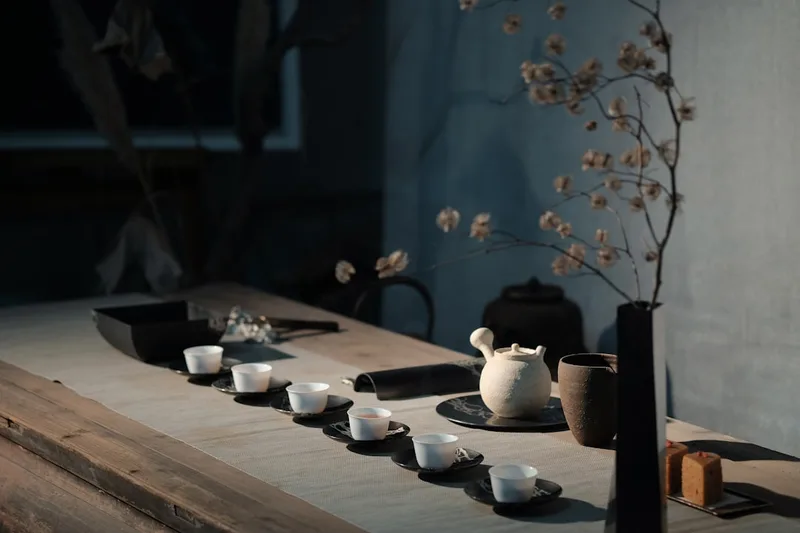
The first time someone handed me a gaiwan I burned two fingers, spilled half the water across the table, and produced a cup of tea that tasted like wet cardboard. Nobody had told me the water was too hot. It took me about a year to work out that almost everything I had been told about tea ceremony was decoration, and the parts that mattered were five numbers I could measure.
What gongfu cha actually means
功夫茶, gongfu cha, translates roughly as “tea made with skill and effort.” The effort is not in the performance. It is in paying attention to a small number of variables and adjusting them.
The method is simple to describe. You use more leaf than a Western teapot would, a smaller vessel, and much shorter steeping times. Then you pour the same leaves again and again, five, eight, sometimes fifteen times in one sitting, and each pour tastes different. The first is bright and sharp. The middle pours are the best. The last ones go soft and sweet.
That structure is the whole thing. Everything else, the tray, the tongs, the little figures on the table, is optional furniture.
The five variables that change how tea tastes
If you only read one section of this guide, read this one. These five decide whether a cup is good, and four of them cost nothing to change.
| Variable | What to aim for | What goes wrong |
|---|---|---|
| Water temperature | 80C green, 90C oolong, 95C+ black and pu-erh | Too hot scalds the leaf and pulls out bitterness |
| Leaf to water | 5g per 100ml, roughly one heaped teaspoon per small vessel | Too little leaf makes a thin, sour cup |
| Steeping time | 10 to 20 seconds for the first pours, adding 5 seconds each round | Long first steeps exhaust the leaf |
| Water | Soft, low mineral, filtered | Hard water flattens aroma |
| Vessel | Thin porcelain or clay that holds heat | A cold pot drops the temperature mid-steep |
Temperature is the one beginners get wrong most often, and it is the one with the largest payoff. Boiling water poured onto a green tea does not just make it bitter. It destroys the amino acids that give the liquor its sweetness, which is why badly made green tea tastes like grass clippings and well made green tea tastes like a meadow. Let a kettle rest for two minutes after it boils and you are already most of the way there.
Leaf ratio is the second. Gongfu brewing is deliberately concentrated. A small gaiwan holding 100ml gets about 5 grams of leaf, which is four or five times what the same volume would get in a Western pot. You compensate with time instead of dilution, steeping for seconds rather than minutes.
Why the first pour goes down the drain
Almost every gongfu session starts by pouring the first infusion away. This is not superstition and it is not a symbolic offering. It is a warm rinse.
Tea leaves pick up dust, broken fragments, and the residue of processing. Ten seconds of hot water washes that off, and more importantly it wakes the leaf up. Tightly rolled oolong and pressed pu-erh need that heat to start opening. If you skip the rinse on an aged pu-erh, the second pour is weak because the cake is still locked shut.
The exception matters. Young green and white teas have nothing to rinse off, and their first pour is often the sweetest of the session. Skip it there. If you want the longer background on how Chinese daily practice handles these small rules, the Tong Shu almanac guide covers how traditional calendars mark the day itself.
Where the six tea types sit on the yin and yang axis
This is the part of Chinese tea culture that maps directly onto the framework the rest of this site is built on, and it is not a metaphor. It is fermentation.
Fermentation is a warming process. Leaves that go through more of it end up warmer in character, and the traditional Chinese classification tracks that line exactly.
| Tea type | Fermentation | Character | Best season |
|---|---|---|---|
| Green | None | Most cooling, bright, sharp | Summer |
| White | Minimal | Cooling, soft, sweet | Summer |
| Yellow | Light | Mild, gently cooling | Late summer |
| Oolong | 20 to 70 percent | Neutral, shifts with roast level | Spring and autumn |
| Black | Full | Warming, malty, deep | Winter |
| Pu-erh | Post-fermented, aged | Most warming, earthy | Winter |
Green tea is picked in spring and drunk through summer, when the body is already running warm and wants something cool and astringent. Black tea and aged pu-erh are winter drinks, and the traditional pairing with milk or with a heavy meal is not an accident. Oolong sits in the middle and slides either way depending on how heavily it is roasted. A light, floral oolong from Taiwan behaves like a white tea. A dark roasted one behaves closer to black.
If you want to test this on yourself, drink a strong green tea and a ripe pu-erh on two separate mornings and notice which one leaves you feeling warm. The five elements guide covers how the same logic runs through food, and the five elements diet applies it to whole meals rather than a single cup.
A beginner setup that fits on a desk
You do not need a tea table, a clay figurine, or a bamboo mat. Four objects cover almost everything.
A gaiwan. A small lidded porcelain bowl, usually 100ml, costing between eight and twenty dollars. This is the most forgiving vessel to learn on because you control the pour with the lid gap rather than a spout.
A small pitcher. Called a公道杯, or fairness pitcher, around 150ml. You pour the whole infusion into it and then divide it between cups, so everyone gets tea of the same strength instead of the first cup being weak and the last being harsh.
Two small cups. Thirty to fifty milliliters each. Smaller than you think. The point is many small pours, not one large mug.
A scale and a thermometer. Under fifteen dollars together, and they matter more than any of the above.
A kettle you already own works. Filtered water works. A ceramic mug works as a cup in a pinch.
Mistakes that actually matter
Steeping too long. The single most common error. Twenty seconds is not a typo. If your tea is bitter, cut the time before you change anything else.
Using too little leaf. The opposite error, and it makes tea that tastes thin and sour. Beginners under-leaf because a gongfu ratio looks absurd in the scoop. It is supposed to.
Rinsing delicate teas. Young green and white tea lose their best pour this way.
Ignoring the water. Tea is 99 percent water. If your tap water tastes like anything at all, the tea will taste like that thing.
Chasing a schedule. The steeping times in this guide are starting points. The leaf tells you when it is done. When the liquor starts going pale and the aroma flattens, stop.
Making it a practice instead of a hobby
The reason tea ceremony survived for a thousand years is not that the tea is better. It is that the process forces a pause that most people do not otherwise take. Boiling water takes four minutes. The first steep takes twenty seconds. Between pours there is nothing to do but wait, and you are holding a cup that is too hot to drink quickly.
That enforced slowness is the same mechanism behind most sitting practices, and it is why the yin and yang framework fits here so well. Tea is a yang activity built out of yin moments: heat and motion, then stillness with a warm cup in your hands. A session runs twenty minutes if you are rushing and an hour if you are not.
You do not need to turn it into a daily ritual. Twice a week, alone, with your phone in another room, is enough to notice the difference. The leaves do not care whether you are being ceremonial. They only respond to temperature, time, and attention.
Common questions
What is the difference between a Chinese tea ceremony and a Japanese one? Japanese tea ceremony, chanoyu, is a formal choreographed practice built around powdered matcha, and the etiquette is the point as much as the tea. Chinese gongfu cha is informal and built around whole leaf tea. There is no fixed sequence to memorize, no prescribed way to sit, and the only real goal is getting the most out of the leaves. You can do it alone at a desk.
Do I need a full tea set to start? No. A gaiwan, a small pitcher, and two cups cover almost everything in this guide. Total cost is usually under thirty dollars. A kitchen scale and a thermometer matter more than any vessel, because water temperature and leaf ratio are what actually change the taste.
Why do you pour the first infusion away? The first pour wakes the leaves and rinses off dust and fragments from production. It is not a superstition, it is a warm rinse. For tightly rolled oolong and compressed pu-erh it also opens the leaf so the second pour extracts evenly. Skip it for young green and white tea, where the first pour is the best one.
What temperature should the water be? Roughly 80C for green and white tea, 85 to 90C for light oolong, and just off the boil, around 95 to 100C, for dark oolong, black tea, and pu-erh. Boiling water on green tea scalds it and turns it bitter. If you have no thermometer, let a kettle sit for two minutes after it boils.
Does tea ceremony have anything to do with yin and yang? The six tea types line up almost perfectly with the yin and yang axis, because both follow fermentation. Unfermented green tea is the most cooling, and fully fermented black tea and aged pu-erh are the most warming. What you drink in winter and what you drink in summer is the same idea applied to a cup.