Bathroom Feng Shui: What Classical Texts Actually Say
Most bathroom feng shui advice comes from tile brands. Here is what classical texts say about placement, doors, mirrors, moisture, and the wealth corner.
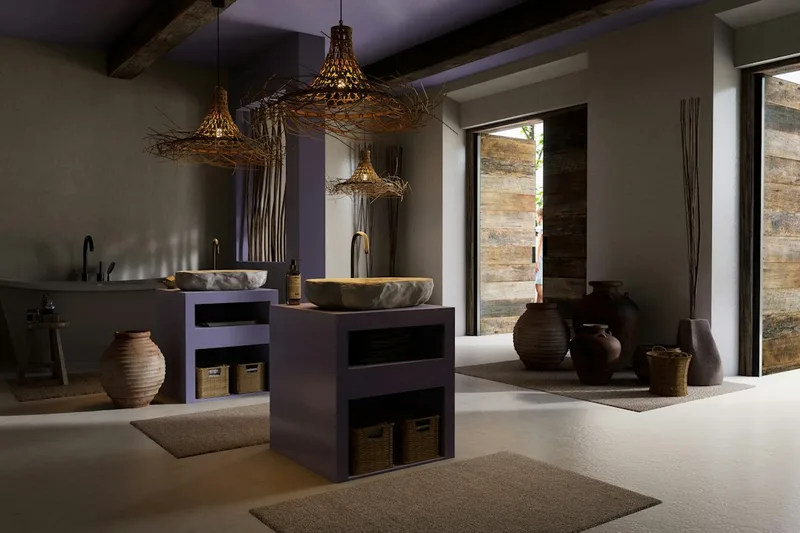
The bathroom is the only room in a house built to remove things. Water leaves through the drain. Air leaves through the fan. Odor leaves through the window. Whatever the room holds, it holds for a few minutes and then sends it away.
That single fact explains most of the rules that follow. Classical feng shui does not treat the bathroom as cursed. It treats it as a drain, and a drain has one job: carry waste out without taking the rest of the house with it.
Most of what you will read about bathroom feng shui comes from companies that sell bathrooms. Tile, fixtures, extractor fans, vanities. The advice tends to end at a product. This article takes the other route. It separates what the old manuals actually say from what the internet has added, and it marks the places where classical reasoning and ordinary building science happen to agree.
The principle: a bathroom is departing water
In the classical vocabulary, water arriving at a house is lai shui (來水), water leaving is qu shui (去水). A bathroom is the clearest departing-water point in a modern home. The old texts care about where departing water sits because that is where qi leaves the building.
This is why the room’s position matters more than its decoration. A bathroom in a corner that nobody uses is a minor drain. A bathroom at the center of the plan, or directly across from the front door, pulls from the spaces the household depends on.
The goal is to keep its drain from doing the work of the whole house. Once you hold that idea, the long list of internet rules sorts itself into three groups: rules with a classical source, rules that are modern folk belief, and rules that are really about moisture.
Five placements the classical manuals treat as problems
1. The center of the house
The center of the plan is called zhong gong (中宮), the center palace. In Eight Mansions and Flying Star practice it is where the household’s qi gathers, and a drain there pulls from every room at once. This is one of the few bathroom rules that appears across otherwise disagreeing schools.
The practical side is just as clear. A bathroom in the middle of a floor plan usually has no exterior wall. No window means no cross ventilation, so steam and odor have one route out: a fan that may be undersized or never switched on. The result is a room that stays damp, grows mold in the grout, and smells faintly of chlorine no matter how often it is cleaned.
If you already have a center bathroom, you cannot move the walls. Run the fan continuously on a low setting, add a dehumidifier, and keep the door closed so the moisture stays in one room instead of spreading through the house.
2. Directly across from the front door
The front door is the mouth of qi, the qi kou (氣口). The front door guide covers this in detail. When a bathroom door sits directly in line with it, the classical reading is that incoming qi meets departing water before it can settle. The folk version of this rule is blunt: money comes in the front and leaves through the toilet.
That framing is later than the manuals, but the underlying geometry is old. A straight line from the entrance to a drain gives the eye and the air a path with nothing to slow it down. A screen, a console table, or a change in flooring breaks the line. So does keeping the bathroom door closed, which is the cheapest fix available.
3. Sharing a wall or a door line with the kitchen
Water and fire sit opposite each other in the five-element cycle. The kitchen is the fire room, anchored by the stove. The bathroom is the water room, anchored by the drain. Classical practice keeps their doors from facing each other and avoids placing the toilet against the wall behind the stove.
The practical version is about contamination, not symbolism. A toilet opening onto a food preparation area is a hygiene problem in any culture. If the two rooms share a wall, check where the plumbing runs. A toilet tank against the back of a stove wall is the arrangement most manuals warn about, and it is also the one most likely to produce a slow leak into a cabinet you never open.
4. Above a bed or above a kitchen
This rule comes from building tradition rather than a single canonical text, and it applies to two-story houses. A toilet directly above a bed or a stove is considered bad in most Chinese building custom. The reason given is respect for the spaces below. The reason that matters is plumbing. A failed wax ring or a supply line above a bed does not leak onto tile. It leaks through a ceiling onto a mattress or a countertop.
If the layout already exists, the mitigation is inspection rather than rearrangement. Check the ceiling below for staining, replace old supply hoses, and know where the shutoff valve is.
5. Opening onto the dining table
A bathroom door that faces where the household eats combines the first two problems. Qi leaving the room meets the table where food and conversation are supposed to gather. The old manuals treat the dining area as a place that should hold energy, not lose it.
In practice, this is about smell and sightlines. A door that opens onto a set table is a door everyone at the table has to look at. A curtain, a screen, or a door that closes fully solves the visible part of the problem.
The wealth corner rule is younger than the internet thinks
Search “bathroom feng shui” and you will find the same warning repeated: never put a bathroom in the wealth corner, usually the southeast. The claim is that the toilet drains the family’s money.
That rule belongs to a specific modern system, the fixed bagua overlay popularized in the twentieth century in the West. It lays the same eight sectors over every building, regardless of compass direction, occupant, or year. Within that system, a drain in the wealth sector drains wealth. The logic is internally consistent, and it is not what the older manuals teach.
Classical Eight Mansions practice does something close to the opposite. Each household has four favorable and four unfavorable directions, calculated from the residents’ birth years or from the building’s facing, depending on the method. The toilet is traditionally placed in one of the unfavorable directions, often wu gui (五鬼, Five Ghosts) or jue ming (絕命, Life-Threatening), so that the drain suppresses a direction the household does not want active. Flying Star practice follows a similar logic with the 2 and 5 stars, the illness and misfortune numbers. A bathroom sitting on a 2 or 5 is a recognized remedy, not a mistake.
So the honest answer is that “never in the wealth corner” is one school’s rule, stated as if it were universal. The older schools would ask a different question: which direction is this household’s drain actually sitting on, and is that direction one it needs to keep clean?
Placement still matters, but the reason matters more than the sector label. A bathroom in the southeast of a house with a persistent damp problem is a real problem, and the cause is moisture, not the compass.
Doors, lids, and the direction of the drain
Four habits cover most of what you can control without touching a wall.
Keep the door closed. Classical practice closes the bathroom door to keep qi from escaping into the rest of the house. Practical life closes it to keep steam, odor, and noise in one room. Both point the same way.
Keep the lid down. Flushing with the lid up throws a fine aerosol of water droplets into the air. Closing the lid before the flush cuts most of that spread. The classical reading is simpler: the drain is the exit, so cover it when it is not in use.
Do not point the door at the bed. This is the version of the front-door rule that matters most in apartments, where the bathroom often opens onto a bedroom. A door that faces the head of the bed puts the drain in the sleeper’s line of sight. Move the bed, or hang something that interrupts the line.
Check the door swing. A bathroom door that opens inward is standard and keeps the room’s air in the room. A door that opens outward into a hallway spreads moisture into the space where the rest of the household passes. If the hinge side can be changed cheaply, it is worth doing.
Mirrors need their own rule
A mirror in a bathroom is useful and easy to misplace. The mirror rules guide covers the full set, but two placements matter here.
Never hang a mirror so that it reflects the toilet. Classical reasoning treats the mirror as a doubling surface, so a reflected drain doubles the drain. The practical reasoning is that a mirror facing the toilet puts the fixture in your sightline every time you walk in, which is not restful.
Never hang a mirror directly opposite the bathroom door if the door faces a bed or a dining area. The mirror will bounce the drain’s line of sight back into the room it opens onto. A mirror on the side wall above the sink avoids both problems and gives you the light you actually wanted.
Ventilation, light, and moisture: where the classics and building science agree
This is the part of bathroom feng shui that has the strongest evidence behind it, and it is the part most articles skip.
A bathroom is a wet room. A ten-minute hot shower in a small bathroom can push relative humidity past 80 percent. The EPA recommends keeping indoor relative humidity between 30 and 50 percent, and mold risk climbs once a room stays above 60. The gap between those numbers is the whole problem.
Four fixes do most of the work.
Run the fan during and after the shower. Twenty minutes after you finish is the standard advice, not two. A fan rated at roughly one cubic foot per minute per square foot of floor area, with a minimum around 50 CFM for a small bathroom, is enough for a standard room. If the mirror is still fogged five minutes after the fan stops, the fan is undersized or the duct is blocked.
Open a window when the weather allows. Cross ventilation beats a fan when outdoor air is dry. In humid climates it does less, and a dehumidifier does more.
Fix drips and leaks immediately. A dripping tap is the one classical warning that is also a plumbing instruction. The folk reading is that a leak drains money. The real reading is that a slow leak rots a cabinet, stains a ceiling, and feeds mold behind tile. Neither outcome is worth postponing.
Keep the floor dry. A bath mat that stays wet is a mold farm. Hang it after each use and wash it weekly.
Light belongs in this section too. A dark bathroom reads as a yin room in a part of the house that is already wet and enclosed. Bright light, ideally daylight from a window or a skylight, changes how the room feels and makes it easier to see the mold you would otherwise miss.
Five-element materials: what belongs in a water room
A bathroom is already a water room. The five-element question is not how to add more water. It is how to keep the room from becoming a stagnant pool.
| Element | Materials and colors | What it does in a bathroom |
|---|---|---|
| Water | Blue, black, glass, mirror, dark tile | The room’s base note. Fine in small amounts, heavy when it dominates. |
| Metal | Chrome, brushed steel, white, silver | Metal produces water in the generating cycle. This is why chrome fixtures feel correct rather than merely modern. |
| Wood | Green, bamboo, timber, plants | Wood gives water somewhere to go. A wooden vanity or a green plant softens a room that is all tile and glass. |
| Earth | Beige, sand, stone, ceramic, terracotta | Earth controls water. Stone counters, clay tiles, and warm neutrals keep the room from feeling cold. |
| Fire | Red, orange, candles, warm bulbs | Fire clashes with water. Keep it to a candle, a warm towel, or a single accent, never a red wall. |
The practical takeaway is a simple palette: white or pale stone for the base, chrome or brushed metal for fixtures, wood or green for warmth, and one small fire accent if you want the room to feel less clinical. The five elements guide explains the generating and controlling cycles in full if the table needs more context.
Plants: yes, but not for the reason you read
Bathroom plants are usually sold as air purifiers. They are not, at least not at the scale of a household bathroom. The often-cited NASA clean air study used sealed chambers and dense planting. A pothos on a shelf moves a tiny fraction of the air a fan moves in a minute.
Plants also add humidity. Transpiration puts water vapor into the air, which is the opposite of what a damp bathroom needs. That makes them decoration with a caveat, not a mistake.
Choose species that tolerate humidity: snake plant, pothos, bamboo, Boston fern, philodendron. Avoid plants that need dry air, and remove any plant that starts to rot at the base. A dying plant in a wet room is worse than no plant.
Small fixes when you cannot move walls
Renters and apartment dwellers get most of the bathroom feng shui advice and almost none of the control. Here is what is actually available.
- A door closer or a hook. The cheapest way to keep the door shut.
- A lid. Free, and it addresses both readings of the rule.
- A stronger fan, or a timer switch. A fan that runs for twenty minutes after the shower does more than any object on a shelf.
- A mirror move. Side wall instead of facing the toilet or the door.
- A lamp. A dark bathroom is the most common problem in rental units, and a plug-in warm light fixes it.
- A dehumidifier. In a windowless bathroom, this is the single highest-impact purchase.
- Decluttering. Counters crowded with bottles read as stagnation. The decluttering guide applies to a bathroom more than to any other room.
Salt bowls, crystals, and charms circulate widely as bathroom remedies. Treat them as symbolic. They do not remove moisture, and a bowl of salt in a damp room becomes a bowl of damp salt. If a small object helps you keep the room tidy and the door closed, it is doing useful work. If it replaces ventilation, it is not.
A checklist you can finish in an afternoon
- Close the bathroom door when the room is not in use.
- Put the toilet lid down after every flush.
- Run the fan during the shower and for twenty minutes after.
- Check under the sink and behind the toilet for drips.
- Move any mirror that reflects the toilet or the door.
- Confirm the door does not face the bed, the stove, or the dining table.
- Replace a dark bulb with a brighter, warmer one.
- Clear the counter down to what you use daily.
- Hang the bath mat to dry after each use.
- If the room has no window, add a dehumidifier.
None of these steps require a renovation, and most cost nothing. That is the point. A bathroom is not a room you fix by decorating. It is a room you fix by letting it do its job without leaking that job into the rest of the house.
The old manuals and a modern building inspector would disagree about almost everything except this: keep the water where it belongs, keep the air moving, and keep the drain covered. The room is doing its work. Your work is to make sure it stays the room’s work.
Frequently Asked Questions
Can a bathroom be in the wealth corner?
It can, and in some classical systems that placement is deliberate. Eight Mansions practice often puts the toilet in one of the household's unfavorable directions to suppress them, and Flying Star practice does the same with sectors carrying the 2 or 5 star. The rule that a bathroom always drains the wealth corner comes from the modern fixed-bagua overlay, not from the older manuals. What matters practically is whether the room leaks moisture or odor into the spaces you actually live in.
Should the toilet lid stay down?
Yes, for two separate reasons. Flushing with the lid up sends a fine aerosol into the air that settles on nearby surfaces, which is a plumbing and hygiene fact rather than a metaphysical one. Classical practice also treats the drain as the exit point for qi and keeps it covered when not in use. The lid costs nothing and satisfies both readings.
What color should a bathroom be?
Light neutrals, soft blues, pale greens, and warm earth tones work best. A bathroom already reads as a water room, so metal finishes and white tile are elementally coherent, and wood or green accents give the water somewhere to go. A deep red or orange dominant scheme adds fire to a water room and tends to make a small space feel hotter and tighter. Keep any fire accent small, such as a candle or a warm towel, rather than a wall.
Is a bathroom in the center of the house bad?
Both the classical manuals and ordinary building practice treat it as a problem. The center of the plan is where the household's qi is said to gather, and a drain there pulls from the whole house rather than one room. In practical terms, a center bathroom usually has no exterior wall, which means no window, poor ventilation, and a persistent moisture problem. If you already have one, continuous fan use and a dehumidifier matter more than any remedy object.
Do plants in the bathroom purify the air?
Not in any way you would notice. A handful of houseplants moves a tiny fraction of the air a fan moves in a minute, and most studies finding air-cleaning effects used sealed chambers and dense planting. Plants also add humidity through transpiration, which is the opposite of what a damp bathroom needs. Keep them because they soften the room and because some species tolerate humidity well, not as a substitute for ventilation.