Waking Up at 3 AM Every Night? The Chinese Body Clock Has an Answer
Waking up at the same time every night? Chinese medicine says it's not random. Each hour links to a different organ, and each one carries its own emotion.
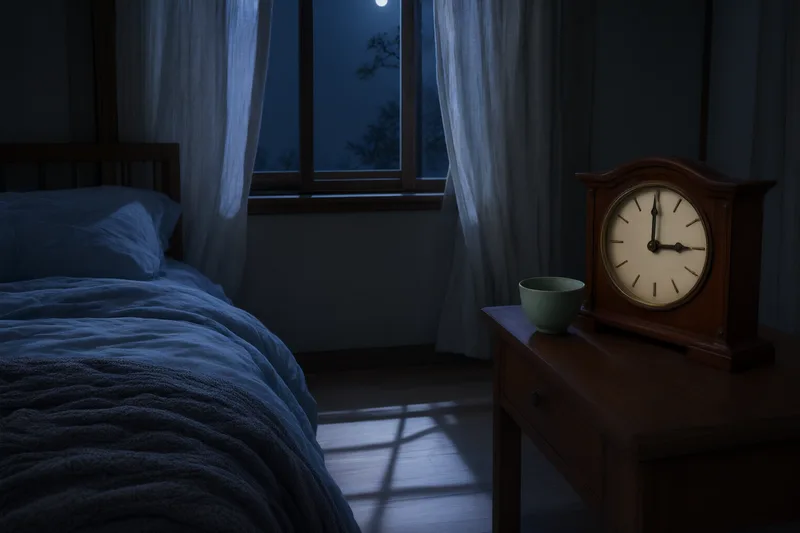
You know the pattern. You fall asleep fine. But somewhere between 2 AM and 4 AM - same time, every night - your eyes open. You’re awake. Not panicked, not in pain. Just… awake. Staring at the ceiling. Wondering why your body keeps doing this.
Western medicine has one answer: stress. Too much cortisol. Bad sleep hygiene. Blue light before bed. And sometimes that is the answer.
But traditional Chinese medicine has a different one - more specific, more interesting, and - for a lot of people - more useful. It says the time you wake up isn’t random. It’s a signal.
The Chinese Organ Clock
Chinese medicine divides the 24-hour day into twelve two-hour periods. In each period, qi - the body’s vital energy - is said to concentrate in a particular organ system. When that organ is out of balance, you may wake during its hours.
The clock runs like this:
| Time | Organ | Emotion |
|---|---|---|
| 1–3 AM | Liver | Anger, frustration, resentment |
| 3–5 AM | Lung | Grief, sadness, letting go |
| 5–7 AM | Large Intestine | Holding on, inability to release |
| 7–9 AM | Stomach | Worry, overthinking |
| 9–11 AM | Spleen | Overwork, self-neglect |
| 11 AM–1 PM | Heart | Joylessness, emotional numbness |
| 1–3 PM | Small Intestine | Indecision, scattered thinking |
| 3–5 PM | Bladder | Fear, resistance to change |
| 5–7 PM | Kidney | Exhaustion, existential fear |
| 7–9 PM | Pericardium | Emotional self-protection |
| 9–11 PM | Triple Burner | Systemic balance, preparing for sleep |
| 11 PM–1 AM | Gallbladder | Resentment, grudges |
| 1–3 AM | Liver | Anger, frustration, resentment |
Notice the Liver shows up twice - 1 to 3 AM. That is the most common wake-up window people report. And the emotion attached to it isn’t a coincidence.
The 1–3 AM Wake-Up: Your Liver Is Talking
In Chinese medicine, the Liver doesn’t just filter blood. It processes emotional material - especially anger, frustration, and the kind of slow-burning resentment you don’t express during the day. (In the Five Elements system, the Liver belongs to the Wood element - more on that here.)
If you consistently wake between 1 and 3 AM, the TCM interpretation is blunt: there is something you’re angry about that you aren’t dealing with. It could be old - a grudge you’ve been carrying for years. It could be current - a situation at work where you feel dismissed or disrespected. The Liver stores what you swallow, and at 1 AM, when the body is still and the mind can’t distract itself, it rises.
I know how this sounds. I was skeptical too. Then I tracked my own wake-ups against what was happening in my life. During a period when I was going through a difficult conflict at work - one I was avoiding rather than resolving - I woke between 1:30 and 2:30 AM every night for three weeks. When the situation finally resolved, the wake-ups stopped within two days.
The correlation doesn’t prove causation. But the Chinese doctors who mapped this system 2,000 years ago weren’t stupid. They noticed patterns across thousands of patients. The Liver processes both metabolic waste and emotional waste - and at night, when the processing peaks, unresolved anger surfaces as consciousness.
What to try: Before bed, take five minutes to ask yourself: Is there something I’m angry about that I’m not dealing with? Write it down. The act of acknowledging it - even if you can’t solve it tonight - sometimes quiets the signal enough to sleep through.
The 3–5 AM Wake-Up: Grief and the Lungs
If you wake between 3 and 5 AM, the organ is the Lung and the emotion is grief.
This is the window traditional Chinese texts describe as the time of “letting go.” The Lungs govern the boundary between inside and outside - breathing is the most literal exchange between self and world. When the Lung energy is disturbed, the body may wake you during its peak hours.
The emotional connection: grief that hasn’t been fully processed. Sadness you’ve pushed aside. A loss you told yourself you were over but aren’t.
In clinical terms, there is some alignment here. Grief and sadness activate the parasympathetic nervous system in ways that affect breathing - shallower breaths, sighing, a sense of weight on the chest. People who are grieving often report waking in the early morning hours - a pattern the Sleep Foundation notes is consistent with circadian rhythm disruption during emotional stress. The TCM framework gives this phenomenon a name and a mechanism: the Lungs are processing what the heart couldn’t.
What to try: If 3–5 AM is your window, consider whether there’s a loss you haven’t fully acknowledged. The loss doesn’t have to be death. It could be the end of a relationship. A job you left. A version of yourself you used to be. The Lung hour is about release - exhaling what you no longer need. Sometimes naming the grief is enough to let the body return to sleep.
The 5–7 AM Wake-Up: Can’t Let Go
Five to seven in the morning belongs to the Large Intestine. Physically: elimination. Emotionally: the inability to let go of what no longer serves you.
If you wake during this window - especially if you wake feeling heavy, stuck, or anxious about the day ahead - TCM would ask: What are you holding onto that needs to be released? A job that’s been dead for two years. A relationship you know is over. A self-image that no longer fits. The body, through the clock, might be telling you it’s time to let something go.
The Free Tool: Track Your Wake-Up Pattern
None of this replaces a doctor. If you have persistent insomnia, see one. The Chinese body clock is a framework for noticing patterns, not a diagnosis.
But patterns matter. And most of us never look for the pattern. We just think “I keep waking up” without asking when.
For the next seven nights, track two things:
- What time did you wake up? (Look at the clock once, note the hour, don’t check again - clock-watching creates its own anxiety.)
- What emotion was in your mind when you woke? Not what you were dreaming - what you felt. A knot in your stomach. A person’s face. A situation you’d been avoiding.
At the end of the week, look at the times and see if they cluster. Then look at the table above and see if the emotion attached to that organ resonates. You might be surprised.
Pick the hour that keeps waking you on the Chinese Body Clock tool →
Or log the week first and let the pattern show up on its own: 7-day sleep tracker.
This is traditional knowledge, not medical advice. The Chinese body clock is a 2,000-year-old observational framework. It can help you notice patterns. It cannot diagnose or treat sleep disorders. If something is seriously wrong with your sleep, talk to a doctor - not an ancient clock.
Next: The Five Elements Explained: Wood, Fire, Earth, Metal, Water - the system behind the organ clock.