Feng Shui Colors: A Room-by-Room Guide to the Right Palettes
Which paint colors shift the energy in your bedroom, kitchen, and living room. A room-by-room feng shui guide with specific shade names and what to avoid.
I painted my home office bright yellow three years ago because a blog post said yellow stimulates creativity. Four weeks later I couldn’t sit in that room for more than an hour without feeling on edge. The color wasn’t wrong. The room was wrong for it. Yellow brings active, rising energy - fantastic in a kitchen where people gather and cook, terrible in a room where you need sustained focus.
Feng shui treats color as an environmental lever. Each color carries the energy of one of the five elements, and every room in your house has a different job. A shade that calms a bedroom can drain a home office. A color that energizes a living room can agitate a bathroom. The trick isn’t finding the “best” color. It’s matching the right color to the right room.
Here is what actually works, room by room, with specific shades you can sample this weekend.
The five elements and their colors
Before picking paints, you need to know what each color does. In feng shui, color is not decoration. It activates element energy.
| Element | Colors | Energy it brings | Best for |
|---|---|---|---|
| Wood 木 | Green, olive, sage, teal, brown | Growth, vitality, new beginnings | Home office, entryway, living room |
| Fire 火 | Red, crimson, orange, magenta, bright yellow | Passion, visibility, excitement | Living room, dining room, front door |
| Earth 土 | Beige, terracotta, clay, mustard, sand | Stability, comfort, grounding | Bedroom, living room, hallway |
| Metal 金 | White, cream, gray, silver, gold | Clarity, precision, organization | Home office, bathroom, kitchen |
| Water 水 | Navy, charcoal, deep blue, black | Wisdom, calm, introspection | Bedroom, bathroom, meditation space |
A room can hold more than one element. A bedroom with clay walls (Earth) and charcoal bedding (Water) combines grounding and depth without conflict. A kitchen with white cabinets (Metal) and sage green backsplash tiles (Wood) balances cleanliness with warmth. What matters is that the dominant color supports what the room is for.
Room by room
Entryway and front door
Your front door is the mouth of chi. Everything that enters your home - opportunity, guests, mail, mood - passes through it. The color you put here sets the tone for the entire house.
Best colors: Red, burgundy, forest green, navy blue, charcoal. Red is the classic feng shui front door color because it attracts attention and energy. A south-facing door in red amplifies recognition and visibility. A north-facing door in navy or charcoal supports career stability. An east-facing door in forest green feeds health and family harmony.
Avoid: White front doors facing east (white is Metal, which chops Wood), or black doors facing south (Water extinguishes Fire). The direction-color clash is subtle but real - you’ll know it if your entryway has felt unwelcoming since you painted it.
If painting the entire door feels like a commitment, test the energy first with a wreath, welcome mat, or potted plants in the target color. I switched from a beige door to a deep burgundy one two years ago and the difference in how the entryway feels is immediate. Guests linger at the door instead of rushing through it.
Living room
The living room is the most yang space in the house - active, social, awake. Your color choices should pull people in and keep conversation moving.
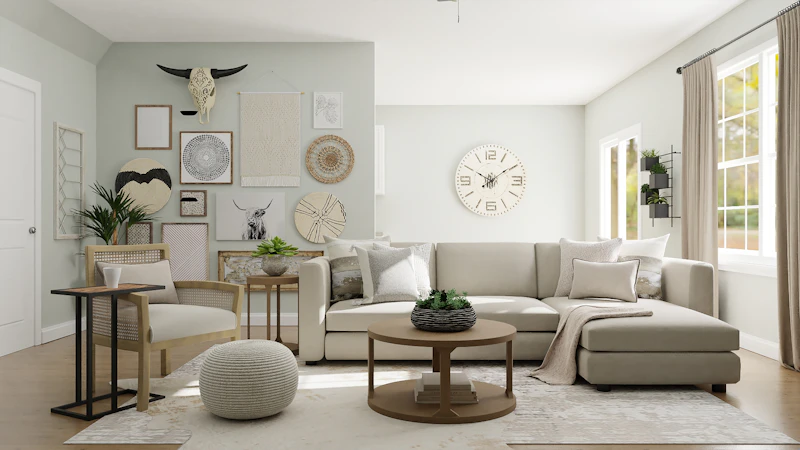
Best colors: Warm beige and cream with green accents (Wood feeds Fire), terracotta with cream trim (Earth grounds the room), sage green walls with warm wood furniture. The safest approach is a neutral base - warm white, cream, or light beige - with color brought in through cushions, art, rugs, and curtains. A terracotta accent wall behind the sofa anchors the seating area without overwhelming the room.
Avoid: Gray as the main wall color in north-facing living rooms. It drains warmth from already-cool light. Also avoid painting every wall a different color - a living room wants coherent energy, not a rainbow. All-white living rooms read as cold and institutional unless you bring in significant texture through textiles and wood.
Kitchen
The kitchen already has Fire from the stove and Water from the sink. Your color strategy should balance these, not amplify one to the exclusion of the other.
Best colors: White, cream, pale yellow, soft green. White cabinets with sage green walls is one of the most reliable feng shui kitchen combinations - Metal keeps surfaces feeling clean, Wood adds warmth without adding Fire. Pale yellow on a single wall near the breakfast nook brings morning energy without competing with the stove.
Avoid: Red walls or red backsplashes. The kitchen already generates intense Fire energy from cooking. Adding more Fire through color can make the room feel frantic. I’ve watched dinner parties turn into arguments in red kitchens. Also limit black and dark blue in large doses - Water extinguishes Fire, and the kitchen needs its Fire intact. A navy kitchen island can work as an accent, but navy cabinets across the whole kitchen can make the room feel cold.
Bedroom
The bedroom needs the most yin energy of any room - restful, quiet, receptive. This is where people make the most feng shui color mistakes because they choose colors they love rather than colors that love them back at 11 p.m.
Best colors: Clay, dusty rose, warm beige, soft sage, light lavender, pale blue-gray. These are Earth and soft Water tones that settle the nervous system. A bedroom painted in warm clay with white trim and linen bedding is hard to get wrong. Pale blue-gray on the walls with cream curtains and low-wattage bedside lamps creates a room that asks you to exhale.
Avoid: Bright red, electric blue, pure white, and dark purple on bedroom walls. Red and electric blue are too stimulating - your bedroom is not a nightclub. Pure white walls in a bedroom create the energy of a hospital room, not a sanctuary. Dark purple absorbs light instead of reflecting it and can contribute to low mood over time. If you love purple, use it in a throw blanket or a small piece of art, not on four walls. Also avoid painting the wall behind your headboard a loud color - your head rests there for eight hours a night and the color affects you even with your eyes closed.
Bathroom
Bathrooms have a lot of Water energy from plumbing, and Water in feng shui is associated with wealth draining away. Color is one way to counterbalance this.
Best colors: White, cream, pale green, soft gray, light blue. White is the default bathroom color for a reason - it signals cleanliness and reflects light into typically windowless rooms. Pale green towels or a sage green accent wall bring Wood energy that absorbs excess Water. Soft gray with white fixtures and a wood-framed mirror balances Metal clarity with just enough warmth.
Avoid: Dark colors in small bathrooms without windows - they shrink the room energetically and physically. Bright red has no place in a bathroom - Fire and Water clash directly, and the result is a room that feels unsettled.
Home office
Remote work made home office feng shui relevant to millions of people who never thought about it before. Color here affects focus, creativity, and how you feel about your work.
Best colors: Soft green (Wood supports steady growth), pale blue-gray (Water supports deep thinking), off-white with green plants (Metal clarity plus Wood vitality). A home office with pale green walls and a solid wood desk gives you the growth energy of Wood under the structure of a grounded work surface. Navy on a single wall behind your monitor creates a focused backdrop without darkening the whole room.
Avoid: Bright yellow, orange, and loud red in the home office. Yellow seems like a creativity booster but for sustained focus work it’s agitating - save it for the kitchen. Gray offices without plants feel draining; the color needs living green to offset its neutrality. All-white offices read as sterile and uninspiring unless you add significant wood, textiles, and art.
How to use the bagua map with color
The bagua is an energy map overlaid on your floor plan. Each of the eight areas corresponds to a life category and has its own element and colors. You don’t paint every gua a different color - that would make your house look like a paint store - but you can use the map to decide where to place color accents.
| Bagua Area | Element | Colors | Where to put them |
|---|---|---|---|
| Wealth (Southeast) | Wood | Green, purple, gold | Accent wall, art, plants, vase |
| Fame (South) | Fire | Red, orange, bright pink | Candle, artwork, cushion, lamp |
| Love (Southwest) | Earth | Pink, terracotta, beige | Bedding, two matching nightstands, art |
| Family (East) | Wood | Green, teal, brown | Plants, family photos in wood frames |
| Health (Center) | Earth | Yellow, beige, earth tones | Rug, center table, large pottery |
| Creativity (West) | Metal | White, silver, gold, gray | Metal desk lamp, whiteboard, frames |
| Knowledge (Northeast) | Earth | Blue, green, beige | Bookshelf, reading chair, study lamp |
| Career (North) | Water | Black, navy, dark blue | Front door mat, hallway art, mirror |
| Helpful People (NW) | Metal | White, gray, silver | Entryway console, guest room accents |
The bagua is a precision tool, not a decorating cheat sheet. Pick one or two areas where your life actually needs attention right now, and start color adjustments there. Trying to activate all eight areas at once dilutes every intention.
What actually moves the needle
A paint sample costs eight dollars. A gallon of paint costs fifty. Both are cheaper than a feng shui consultation and easier to reverse than built-in furniture. Walk through your house tonight after everyone else is asleep. Notice which rooms feel good and which rooms feel off. The off rooms usually have a color problem disguised as a layout problem.
Start with the room where you spend the most waking hours. Buy three samples in the recommended range for that room. Paint a two-foot square on each wall. Live with them for three days - morning light, afternoon light, lamp light. One of the three will feel right in a way the others don’t. That’s the one.
Feng shui color theory, stripped of its mysticism, is practical environmental psychology with two thousand years of field testing. The right color in the wrong room hurts. The right color in the right room feels like the house just exhaled.
Frequently asked questions
What is the best feng shui color for a bedroom?
Soft, muted earth tones - warm beige, clay, dusty rose, or light terracotta. These colors create the stable, grounding energy that promotes rest. Avoid bright red, electric blue, and pure white, which overstimulate the room.
Can I paint my front door red in feng shui?
Yes. A red front door is one of the most enduring feng shui practices. Red attracts attention and positive energy to your entrance. It works especially well on south-facing doors. The key is the right shade - Chinese lacquer red or burgundy, not fire-engine red.
Which colors should I avoid in a kitchen?
Avoid too much red and orange in kitchens - the fire element is already strong from the stove. Adding more fire through wall color can create excessive, agitated energy. Also limit black and dark blue, which represent water and symbolically extinguish the cooking fire.
Does feng shui recommend painting every room a different color?
No. Most homes work best with two to three colors total, flowing naturally between rooms. The goal is a coherent color story that supports how each room is used, not a different color behind every door. Transitions matter more than individual room choices.
What color brings the most wealth in feng shui?
Purple, gold, and red are traditionally associated with wealth and abundance. But placing them in the wrong room backfires. A purple accent wall in a southeast-facing home office (the wealth corner on the bagua map) is more effective than painting your entire bedroom gold.
New to feng shui? Start with our Beginner’s Guide to Feng Shui for the core concepts before diving into color specifics.